


Martial arts are much more than fighting styles. They build discipline, confidence, fitness, and focus, and each style has its own purpose, history, and technique. Whether you are a parent exploring options for your child, a teenager wanting to learn self-defense, or an adult looking for a new fitness routine, understanding these differences helps you choose wisely and if you’re searching for martial arts classes in Navi Mumbai, this guide will make the decision much simpler.
What Are Martial Arts?
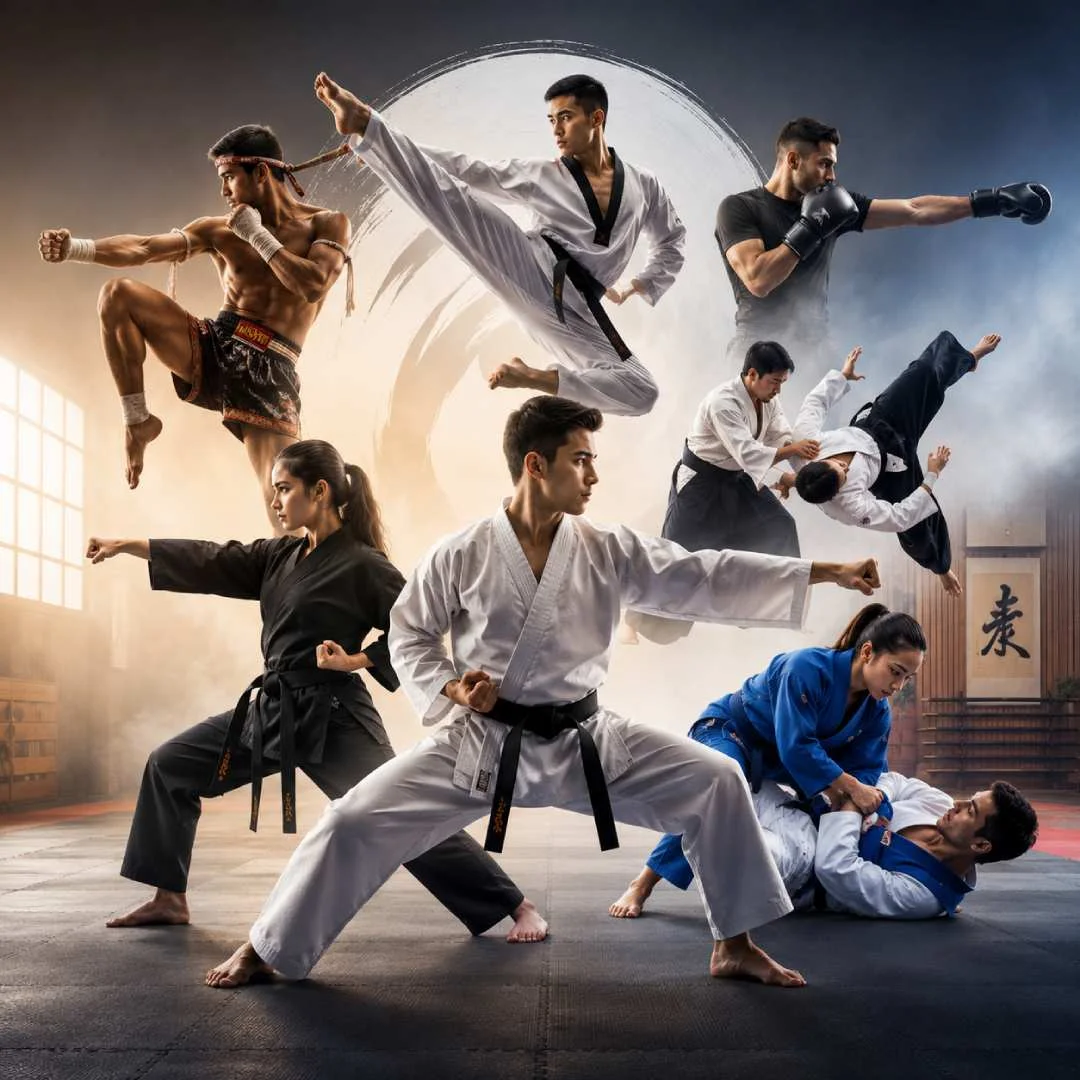
10 Popular Types of Martial Arts
1. Karate
One of the most popular martial arts in the world, karate has its roots in Okinawa, Japan. It emphasizes precise and quick striking techniques such punches, kicks, knee strikes, and open-hand blocks.
- Best for: Kids, beginners, discipline building
- Difficulty: Beginner-friendly
2. Taekwondo
Taekwondo originated in Korea and is renowned for its quick, high, and spinning kicks. It places a strong emphasis on quickness, flexibility, and strong leg skills in addition to rigorous discipline and deference to teachers.
- Best for: Kids, fitness, competition.
- Difficulty: Beginner-friendly.
3. Judo
Judo, which has its roots in Japan, emphasizes grappling, takedowns, and throws over hitting. Technique is more crucial than physical power as practitioners learn to take advantage of their opponent’s momentum.
- Best for: Self-defense, discipline, all ages
- Difficulty: Moderate.
4. Brazilian Jiu-Jitsu (BJJ)
BJJ, which originated in Brazil from Japanese wrestling, focuses on chokeholds, joint locks, and ground fighting. For smaller people learning to dominate larger opponents, it’s particularly helpful.
- Best for: Self-defense, adults, problem-solving under pressure
- Difficulty: Moderate to advanced.
5. Muay Thai
Muay Thai, also called the “Art of Eight Limbs,” has its roots in Thailand and employs fists, elbows, knees, and shins to strike. It’s a hard workout that develops actual striking power.
- Best for: Fitness, self-defense, adults
- Difficulty: Moderate.
6. Kung Fu
Kung Fu is a large family of Chinese martial arts that includes anything from harsh striking techniques to graceful, animal-inspired moves. It combines weapon forms, kicks, and blows with a solid philosophical base.
- Best for: Flexibility, discipline, confidence.
- Difficulty: Moderate.
7. Kickboxing
Kickboxing originated as a hybrid combat sport in both Japan and the West, combining boxing punches with martial arts kicks. It’s energetic, fast-paced, and a great cardio exercise.
- Best for: Fitness, weight management, adults.
- Difficulty: Beginner-friendly.
8. Boxing
Although boxing has historical roots, it was codified in England and concentrated only on defense, footwork, and punches. It improves reflexes, endurance, and hand-eye coordination.
- Best for: Fitness, confidence, teenagers and adults.
- Difficulty: Beginner-friendly.
9. Krav Maga
Rather than being a traditional sport, Krav Maga is a useful self-defense system that was created in Israel for military use. It teaches how to use attacks, holds, and escapes to quickly and instinctively respond to threats in the real world.
- Best for: Self-defense, teenagers, adults.
- Difficulty: Moderate.
10. Mixed Martial Arts (MMA)
MMA combines grappling methods like BJJ and wrestling with striking tactics like boxing and Muay Thai. It started out as a competitive sport to see different styles perform best in a full-fledged battle.
- Best for: Competition, advanced fitness, well-rounded skill
- Difficulty: Advanced.
Benefits of Learning Martial Arts
Regular training offers benefits that go well beyond combat skills:
- Increased cardiovascular health and fitness
- Managing weight with vigorous, calorie-burning workouts
- increased self-assurance as abilities and belts advance
- Self-control developed via regular practice
- Increased concentration at work or school
- Increased body coordination and flexibility
- Strength of mind and alleviation of stress
- Useful self-defense techniques for actual circumstances
- Cooperation and respect, particularly in group classes
How to Choose the Right Martial Art
Your objectives will determine the greatest option, not which style is “best.” Take into account these elements:
- Age: Karate and Taekwondo, which provide structured, beginner-friendly instruction, frequently work well for younger kids.
- Goals: Techniques like Judo, Krav Maga, or BJJ are very useful if self-defense is the first priority.
- Fitness level: Kickboxing and Muay Thai are equally demanding aerobic exercises.
- Interest in competition: There are robust competitive circuits in Taekwondo and MMA.
- Discipline requirements: Structure and respect are highly valued in traditional arts like Karate and Kung Fu.
Investigating Taekwondo classes in Navi Mumbai is a fantastic place to start if you’re particularly interested in Korean striking skills. Self-defense classes in Navi Mumbai are frequently preferred by teenagers and adults who are only concerned with practical protection, while structured martial arts training in Navi Mumbai is beneficial for individuals seeking an all-around physical and mental workout. Joining a sports club in Navi Mumbai that provides several disciplines under one roof makes it even simpler for families seeking variety outside of martial arts.
Frequently Asked Questions (FAQ)
Because of their methodical, planned training approaches, karate and taekwondo are typically thought to be the easiest for novices.
Many people consider Taekwondo and Karate to be safe, age-appropriate options that provide a strong focus on control and discipline.
Although many schools provide introduction classes even earlier, most kids can start around age 5 or 6.
Indeed. With consistent practice, almost all martial arts enhance coordination, strength, flexibility, and cardiovascular fitness.
To develop consistency without running the risk of burnout, two to three sessions per week is a decent place to start.
Taekwondo emphasizes strong, high, and spinning kicks, whereas Karate concentrates more on hand strikes and blocks.


