


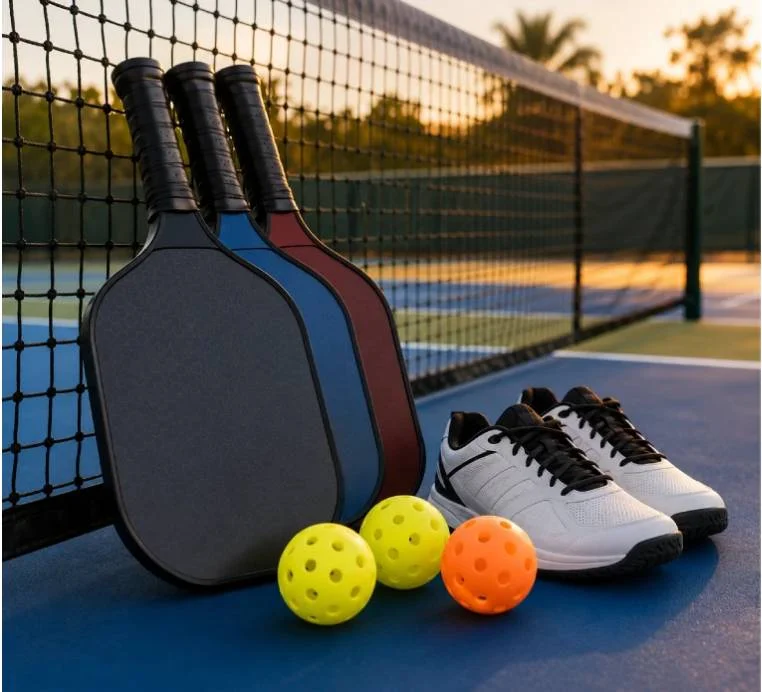
Pickleball is exploding in popularity across India right now, and it’s easy to see why it’s simple to pick up, social by nature, and welcoming to pretty much any age group. But here’s the catch: while the game itself is easy to learn, the right Pickleball Equipment makes a bigger difference than most beginners expect, shaping how comfortable, controlled, and enjoyable every session feels.
At a Sports Club in Nerul, Navi Mumbai like Nerul Gymkhana, beginners usually get their first real taste of proper courts, guided sessions, and correctly set-up Pickleball Equipment and that alone helps them understand the game far faster than casual play on a random driveway or unregulated surface ever could.
This guide walks through everything worth knowing about Pickleball Equipment paddles, balls, court setup, common beginner mistakes, and how equipment quietly shapes your actual performance on court.
Why Pickleball Equipment Matters More Than You Think
Compared to most racquet sports, pickleball is oddly sensitive to equipment differences. A small shift in paddle weight, ball type, or surface quality can change the entire feel of a game.
Good Pickleball Equipment does three things:
- Improves shot control and consistency
- Reduces physical strain during long rallies
- Speeds up how quickly beginners actually learn
Most new players assume skill is all that matters and equipment is secondary. In reality, the gear you use directly shapes how fast you improve.
Pickleball Paddles: The Science Behind Control and Power
Of all the Pickleball Equipment on court, paddles matter most; they’re what directly controls ball response, spin, and shot accuracy.
Paddle Materials Explained
Wood Paddles — Dense and heavy, with minimal control refinement. They absorb less vibration and aren’t really built for long-term progression.
Composite Paddles — Built from fiberglass or polymer blends, striking a balanced “sweet spot” between control and power. This is where most players end up landing.
Graphite / Carbon Fiber Paddles — High-performance, stiff-surfaced paddles that transfer energy more efficiently, giving sharper control and quicker reaction time.
Understanding Paddle Core Materials: Polymer vs. Nomex vs. Aluminum
Inside every set of Pickleball Paddles, the core is really what decides how the ball behaves.
Polymer Core — Soft feel, better control, quieter on impact. A solid choice for beginners and intermediate players.
Nomex Core — Harder and louder, delivering more power but sacrificing some control.
Aluminum Core — Lightweight with a controlled touch, though less commonly used these days.
The core is really what defines the “feel” of the game — not just whatever’s printed on the paddle’s surface.
Paddle Weight + Grip
- Lighter paddles → faster reactions, better at the net
- Heavier paddles → more power, but fatigue sets in quicker
- Small grip → better wrist spin control
- Large grip → more stability, less flexibility
This is exactly why serious players never pick Pickleball Paddles randomly; they test several combinations before settling on one.
Pickleball Balls: Why Small Holes Change Everything
Pickleball Balls look almost identical at a glance, but indoor and outdoor versions are engineered quite differently.
Indoor Balls — Softer plastic, larger holes, a more controlled bounce, built for smooth surfaces.
Outdoor Balls — Harder plastic, smaller and more numerous holes, wind-resistant, built for a faster game.
Physics Behind Pickleball Balls (Key Insight)
The hole pattern directly affects air resistance, spin stability, and speed control.
Outdoor Pickleball Balls are designed to cut through wind drag, while indoor balls prioritize predictable bounce. Grab the wrong type and your rally rhythm and shot timing fall apart fast.
Court Essentials: The Hidden Part of Pickleball Equipment
Even with the best Pickleball Equipment in hand, the court ultimately decides how the game actually feels and how quickly a player builds real control. Most beginners obsess over Pickleball Paddles and Pickleball Balls while completely ignoring the surface underneath and that’s one of the biggest mistakes in learning this sport.
A well-maintained court keeps every shot predictable, the bounce stays consistent, footwork feels stable, and rallies become far easier to control.
Standard Requirements:
- Net height: 34 inches at the center, 36 inches at the sides
- Smooth, even surface no cracks, dust, or loose debris
- Clearly marked kitchen (non-volley zone), baseline, and sidelines
- Proper lighting, free of glare or shadow patches
- Correct court dimensions for fair rally spacing and movement
How Good Facilities Improve Learning Speed
In a structured setup like Nerul Gymkhana, courts are held to consistent standards, letting players focus purely on improving rather than constantly adjusting to uneven conditions.
Good facilities usually offer:
- Regular court maintenance for consistent bounce
- Proper net tension for accurate practice
- Clean surfaces that support controlled movement
- Standard Pickleball Balls available for match consistency
Beginner Mistakes Most Paddle Players Make
- Choosing the Wrong Paddle Weight
Beginners often assume heavier Pickleball Paddles mean more power, but really, they slow reaction speed and hurt control especially during quick net exchanges and defensive rallies.
- Ignoring Core Material Differences
Most players never think about how the core affects performance. Polymer favors control, Nomex adds power, and aluminum changes the touch entirely shifting how every shot feels.
- Using the Wrong Pickleball Balls
Swap indoor for outdoor (or the reverse) and timing falls apart. Pickleball Balls behave differently in wind, bounce, and speed, which throws off rally rhythm and shot prediction.
- Overpaying for Advanced Equipment Too Early
Plenty of beginners jump straight to premium carbon fiber Pickleball Equipment before even understanding their playing style spending more without actually improving their game.
- Poor Grip Selection
Grip size gets overlooked constantly, yet it’s critical for control. The wrong grip on Pickleball Paddles leads to wrist strain, weaker spin control, and fatigue during longer sessions.
Why Equipment & Environment Must Work Together
Even top-tier Pickleball Equipment can’t perform well on a poor court. Surface quality, lighting, and net tension all directly shape gameplay.
A structured facility like a Sports Club in Nerul, Navi Mumbai typically offers standardized court dimensions, proper net tension, consistent ball bounce, quality Pickleball Paddles and Pickleball Balls on hand, and a genuinely beginner-friendly setup and together, this combination speeds up skill development considerably.
Getting Started with the Right Pickleball Equipment
You really don’t need premium gear on day one. A smart starter setup looks like this:
- A mid-weight composite paddle
- Indoor or outdoor Pickleball Balls, depending on your court
- Proper court shoes with good lateral grip
Once you get a feel for your own style control-focused or power-focused you can upgrade your Pickleball Equipment accordingly.
Conclusion: Why Equipment Knowledge Improves Your Entire Game
Understanding Pickleball Equipment isn’t just a technical exercise it directly shapes how enjoyable and how fast your learning curve turns out to be.
From picking the right Pickleball Paddles, choosing the correct Pickleball Balls, to understanding what the court itself demands, every piece shapes your performance.
Pair all of that with a proper facility like a Sports Club in Nerul, Navi Mumbai, and you get the ideal setup to learn faster, play better, and genuinely enjoy the game.


