


















Navigating the world of combat sports often feels like learning a secret language because every style carries a deep story and a unique set of rules. You might have seen athletes on television performing high-flying kicks or watched a local class where students shout with incredible energy during their practice sessions. For many people in 2026, the term ‘taekwondo‘ is very familiar, yet the actual depth of its heritage remains a mystery to those outside the training hall. The subject demands that one look beyond the sport and into a rich history that has transformed the lives of millions worldwide through movement and the mind’s strength.
The Literal Breakdown and Meaning of Taekwondo
When explaining what taekwondo is, starting with the name itself makes sense because the name serves as a roadmap for the entire practice. Not all sports place importance on names, but the meaning of taekwondo explains in detail what the body and mind are expected to do during training. In Korean, the name is divided into three distinct parts that culminate in a complete philosophy.
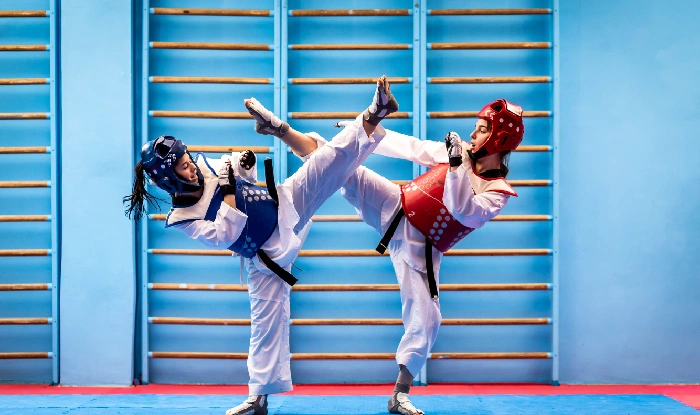
- Tae: This translates to striking or breaking with the foot, hence the reason why the art is so renowned for its wide variety of kicks, many of which are very powerful.
- Kwon: This literally means fist or striking with the hand. This indicates that although kicks are the most prominent element, hand techniques remain important in the system.
- Do: This perhaps might be the most important part of what taekwondo means, which means the way or the path, signifying mental discipline and the journey through life.
- The Unified Definition: When you put these three segments together, you get the way of the foot and the fist, which together represent a total system of unarmed self-defence.
Ancient Roots and the Origin of Taekwondo
The origin of taekwondo is a fascinating journey that stretches back over two thousand years to the ancient kingdoms of the Korean peninsula. Long before these practices became common in the sporting world, they were survival mechanisms employed by warriors to defend their domains, countries, and people. While the modern name is relatively new, the movements are a direct evolution of these ancient combat styles.
- The Three Kingdoms: In the first century BC, the Three Kingdoms, which were Goguryeo, Silla, and Baekje, also developed their own style of fighting techniques for their soldiers, which became the origin of taekwondo.
- Taekkyon Influence: This ancient style focused on fluid, rhythmic footwork and is widely considered the primary ancestor of modern kicking techniques.
- The Hwarang Warriors: In the Silla kingdom, a group of young men pursued these studies not merely for war, but also for the development of character, leadership, and social responsibility.
Modern Development & History of Taekwondo
The modern concept of the history of taekwondo, however, began to emerge in the second half of the twentieth century, following the end of the Japanese occupation of Korea. During the occupation, many traditional arts were banned, forcing masters to practice in secret. Once Korea regained its independence, there was a massive movement to restore a singular national martial art.
- The Nine Kwans: After 1945, several major martial arts schools known as Kwans opened in Seoul, each teaching slightly different versions of traditional combat during this era of taekwondo history.
- The 1955 Conference: On April 11, 1955, a group of masters and historians met to unify these schools under a single name, creating a national identity and a formal origin for taekwondo.
- Olympic Recognition: The journey from local schools to the world stage was rapid, culminating in its designation as a demonstration sport in 1988 and as a full medal Olympic sport by 2000.
The Values of a Traditional Korean Martial Art
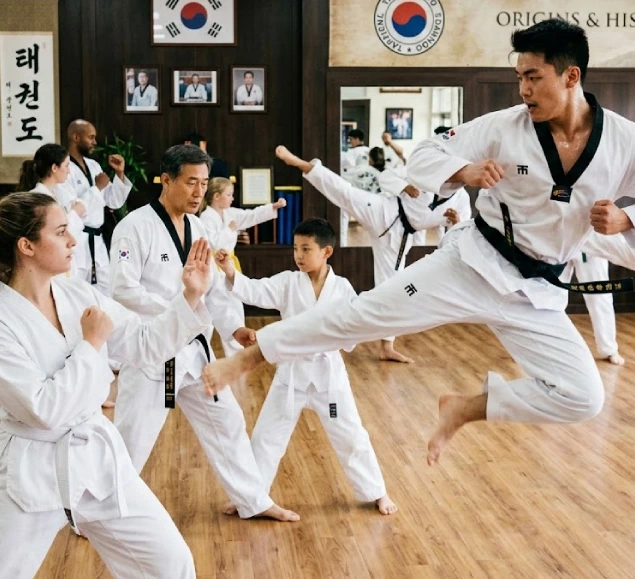
A traditional Korean martial art is never just about physical violence; it is a tool for building a better society. Every student who walks onto the mats is taught that a strict moral code must govern their strength. These principles are known as the Tenets of Taekwondo, and they are expected to be practised both inside the gym and in daily life.
- Courtesy and Integrity: Students of this traditional Korean martial art must show respect to everyone they meet and maintain a strong sense of right and wrong.
- Perseverance: This teaches the value of never giving up, whether you are trying to master a difficult kick or facing a challenge at your workplace.
- Self-Control and Spirit: They should be able to keep their temper in check and also be courageous enough to stand up for what is right in life, despite the circumstances thrown against them.
Choosing Your Training Path
Finding a place to begin your journey is just as important as the style you choose because the environment dictates how much you will grow. If you are looking for taekwondo in Navi Mumbai, you should seek out a facility that respects the traditional roots while providing modern safety equipment. It will also be a great foundation for those who prefer other striking styles, which is why it’s important to explore karate training classes in Navi Mumbai.
- Qualified Coaching: Ensure instructors are certified by recognised bodies, such as the Kukkiwon, to ensure you are learning the correct taekwondo history and forms.
- Safety First: A professional taekwondo school in Navi Mumbai will provide proper mats and protective gear to ensure every student can train without fear of injury.
- Community Environment: Training at a location such as the Nerul Gymkhana Club will provide a family-friendly atmosphere where everyone can learn together and make lifelong connections.