
















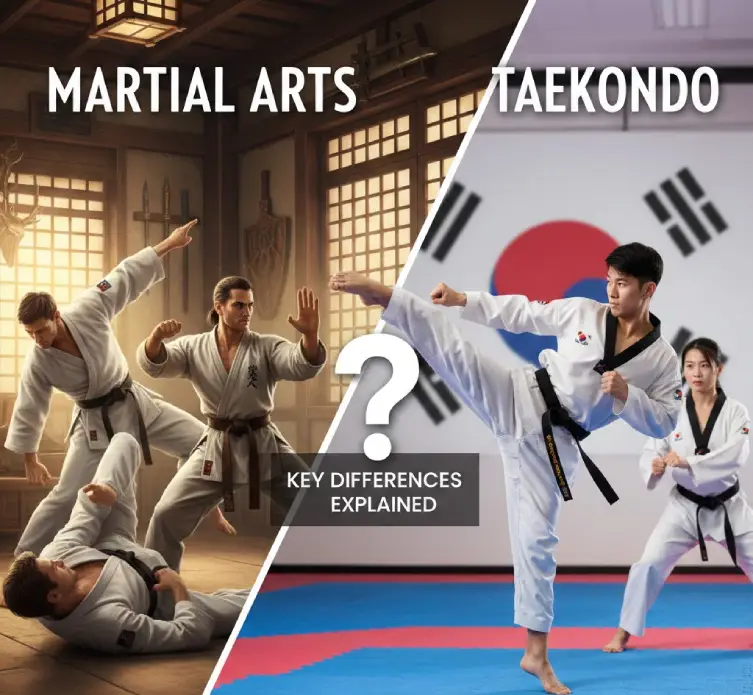
Choosing a martial art can be challenging. Even after deciding to pursue martial arts training, you face another question: which specific style should you choose? Many parents or beginners are unsure whether to practice general martial arts or just Taekwondo. Both alternatives provide exercise, self-defense, and discipline, but they vary in technique, training methodology, and objectives. It’s important to know these differences before you spend time and energy on them.
This blog clearly describes martial arts vs. taekwondo, which suits your goals accordingly. At the end, you’ll know which style is best for your age and fitness level.
What are martial arts, and why do people practice them
Martial arts are combat systems and fighting styles that originated in Asia and other regions, with a primary focus on self-defense, sport, and mental development. These systems include striking, grappling, weapon training, and internal arts such as Tai Chi.
The main reason for pursuing martial arts:
- Physical fitness & flexibility—Martial arts training improves strength, endurance, and coordination throughout the body
- Mental focus & stress relief—Either remove this specific percentage (no source provided) OR: “Training has been shown to significantly reduce stress and anxiety levels.”
Every age group pursues a different style of martial arts. Children often learn discipline and coordination, while adults benefit from fitness, self-defense, and reducing stress.
Today, over 500 million people globally practice different types of martial arts vs taekwondo, showing the universal appeal of martial arts for physical and mental well-being.
What is taekwondo, and what are its unique features
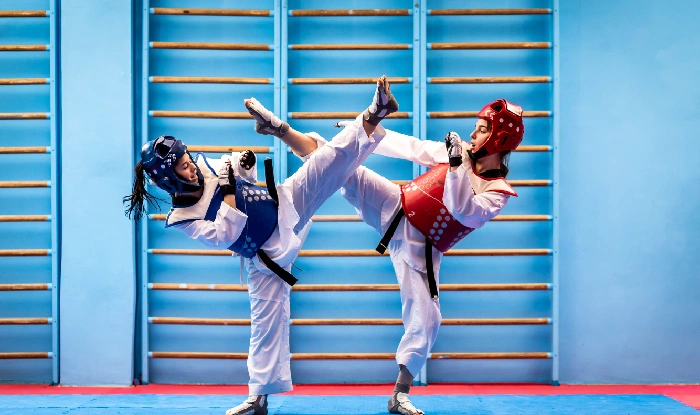
Taekwondo is a martial art that came from Korea in the 1940s and 1950s. It combines previous Korean fighting styles with karate. The term means “the way of foot and hand,” which stresses rapid, strong kicking movements.
Key facts about Taekwondo:
- Practiced by 80+ million people across around 200 different countries, with 70% of practitioners under 18 years old.
- The sport was declared an Olympic sport in 2000, providing an organized sport in the world.
- It focuses on speed, balance, agility, flexibility, and discipline. This makes it a good choice for beginners and is geared towards youth
There is a distinctive belt system for taekwondo that aids students in keeping on top of their progress and increasing their confidence with time.
Martial arts vs Taekwondo – key differences
| Aspect | Martial Arts (General) | Taekwondo (Specific) |
| Global Reach | 500–650M practitioners worldwide | 80M+ in 200+ countries |
| Technique Focus | Striking, grappling, weapons, internal arts | Kicks and fast strikes |
| Sport Status | Includes both traditional and competition styles | Olympic sport since 2000 |
| Youth Participation | Wide age range | ~70% under 18 |
| Training Duration | Varies by style | Black Belt in 3–5 years |
This table provides a clear comparison of the main differences between general martial arts and Taekwondo.
Benefits of taekwondo compared to martial arts
Taekwondo provides unique benefits to students:
- It burns between 500 and 700 calories per hour, which improves endurance, strength, and general health.
- Lessons that are structured help focus, balance, and discipline.
- Through structured Taekwondo training, both children and adults can set and maintain clear, achievable goals
Taekwondo’s framework allows beginners to make steady progress, and the more diverse martial arts can provide students with many choices and allow them to explore different methods. Learning in Nerul Gymkhana helps students learn about taekwondo with knowledgeable instructors in a safe and uplifting setting.
Challenges of learning martial arts v/s taekwondo
Both martial arts and Taekwondo require dedication and patience:
- Time commitment—It normally takes 3 to 5 years to get a Black Belt in Taekwondo, but certain martial arts styles take longer.
- Training intensity—Taekwondo that involves striking may cause small bruises, while grappling arts may put stress on joints.
- Style differences—Some martial arts focus more on self-defense or philosophy than on sport, while Taekwondo focuses on regulated competition.
Understanding these challenges helps learners choose a style that matches their goals, age, and fitness level.
How to choose between martial arts and taekwondo
When deciding, think about the following:
- Taekwondo is great for kids and competition, but other martial arts provide a wider range of skills.
- Age and comfort level—Taekwondo is particularly well-suited for children due to its structured belt system, while other martial arts like karate and Jiu-Jitsu may appeal more to adults seeking varied techniques.
- Training goals, such as getting ready for a competition, relieving stress, or learning self-discipline
Training at a trusted institution like Nerul Gymkhana allows students to explore martial arts vs. taekwondo safely, gain proper guidance, and build long-term skill.
Conclusion
Both general martial arts and Taekwondo provide physical, mental, and self-defense benefits. Martial arts offer variety, tradition, and multiple techniques, while Taekwondo emphasizes kicking, speed, and structured progression. Your choice depends on your fitness goals, age, and personal preference. With professional guidance from Nerul Gymkhana, you can safely explore martial arts v/s taekwondo, develop confidence, and enjoy lifelong skills. Which style will you start learning first?
Frequently asked questions
- What is the main difference between martial arts and Taekwondo?
Martial arts cover a wide range of styles, including striking, grappling, and weapons. Taekwondo focuses on fast kicks, strikes, and structured competition. - Can beginners practice martial arts v/s Taekwondo?
Yes, both are suitable for all ages. Taekwondo is particularly youth-friendly, while general martial arts suit adults seeking fitness or self-defence. - How long does it take to reach proficiency?
Most students achieve a Black Belt in Taekwondo in 3–5 years. Progress in general martial arts varies depending on the style and dedication. - Is taekwondo better for children than other martial arts?
Taekwondo’s belt system, structured lessons, and focus on discipline make it ideal for kids. Other martial arts also benefit youth but may be less structured.