





Picture this: you’re three games into a weekend tournament, and your forearm starts screaming. Your hand feels like it’s been squeezing a stress ball for hours, And your elbow? That’s another story entirely.
Here’s something most players don’t realize: Research shows 68.5% of pickleball players experience injuries annually, with improper equipment like wrong grip size being a contributing factor. Using equipment that doesn’t fit properly. Getting your pickleball paddle grip size right isn’t just about comfort. It’s about protecting your body and elevating your game. Let me show you exactly how to measure grip size, pickleball-style and why it matters more than you think.
The Real Impact of Grip Size on Your Game
Your grip size affects everything. When you’re holding the right size paddle, control becomes effortless. Your shots land where you want them. Power flows naturally through your swing. But mess up this one detail, and you’re setting yourself up for trouble.
Tennis elbow has become the signature injury of pickleball players. Walk into any orthopedic clinic, and the doctors will tell you the same story. Players show up with forearm tendonitis, wrist pain, and carpal tunnel symptoms. The culprit? Wrong grip size combined with hours on the court.
What happens with a grip that’s too small:
- You squeeze harder than necessary, creating forearm strain
- The paddle slips in your hand during swings
- Overgripping leads directly to tennis elbow
- Your muscles work overtime, causing early fatigue
Problems with a grip that’s too large:
- Your wrist can’t move freely through shots
- Generating spin becomes a real struggle
- Hand fatigue sets in faster than normal
- Quick grip changes between forehand and backhand become difficult
Proper grip size pickleball equipment gives you freedom of movement without forcing your hand into unnatural positions.
Breaking Down the Numbers
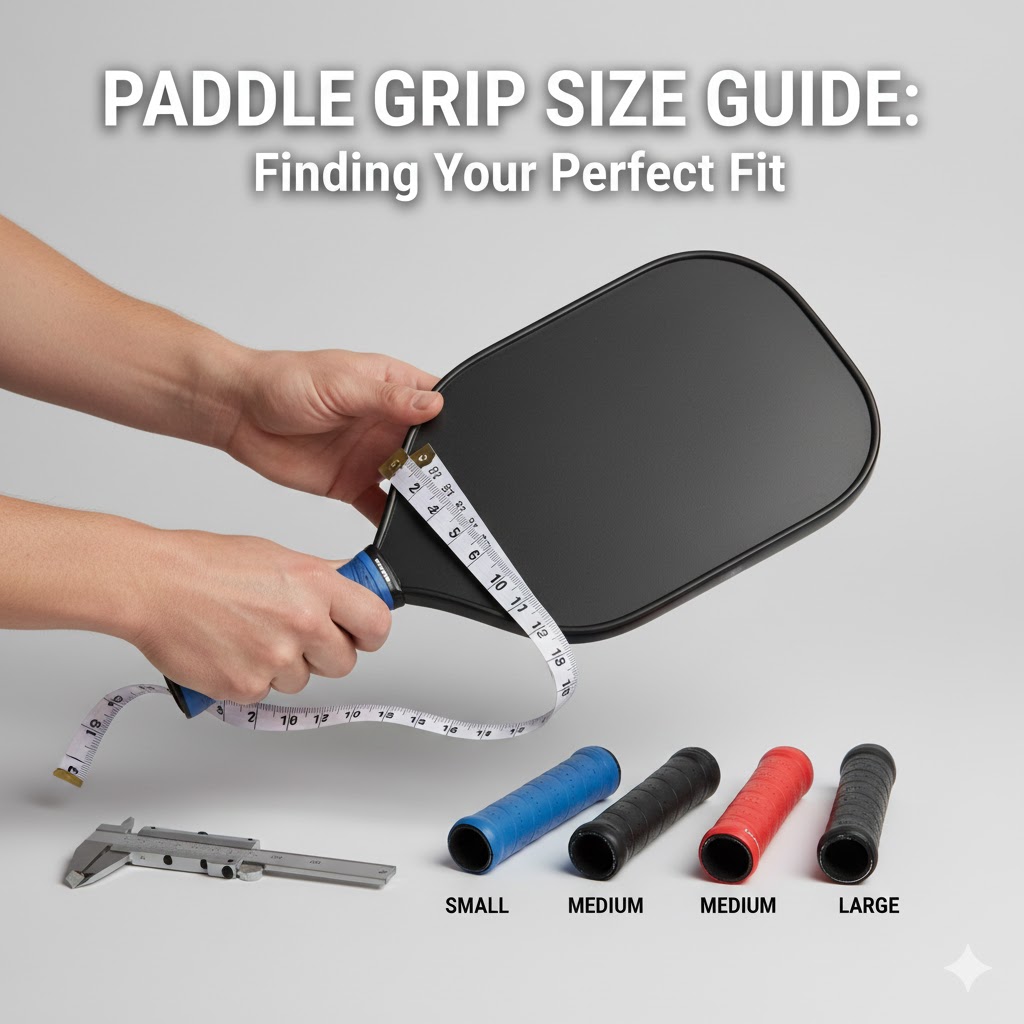
Standard paddles range from 4 inches to 4.5 inches in circumference. Here’s how the sizes break down:
- Small grips measure 4-4.125 inches
- Medium grips measure 4.25 inches
- Large grips start at 4.5 inches and go up from there
Most manufacturers stick to these standard sizes. The good news? You can always build up a smaller grip using overgrips or tape. Reducing a grip that’s too large? That’s nearly impossible. This matters when you’re shopping for your next paddle because the grip size chart pickleball manufacturers provide should guide your initial purchase.
Three Ways to Find Your Perfect Grip Size
The Ruler Method
Grab a ruler and open your dominant hand. Look at your palm and find the horizontal creases. Locate the bottom crease that runs horizontally across your palm. Place the ruler at that crease and measure straight up to the tip of your ring finger. That measurement in inches equals your ideal grip circumference. This is the accurate way to measure grip size for pickleball, and it takes about 30 seconds.
The Index Finger Test Works in the Store
Pick up a paddle and hold it like you would during play. Use an Eastern grip, as if you’re shaking hands with the handle. Now slide your opposite index finger into the space between your fingertips and the palm of your gripping hand.
The fit should feel snug but not cramped. Your finger should slide in with just a touch of resistance. Too much space? The grip’s too large. Can’t fit your finger? Too small. This paddle grip guide method helps you test paddles before buying.
The Height Method Gives a Quick Starting Point
- Standing under 5’3 Start with a 4 inch grip
- Between 5’3″ and 5’8″? Try 4.25 inches
- Taller than 5’8 ? Look at 4.5 inches
This method works as a rough estimate, but your hand size matters more than your height. A tall person might have smaller hands, and the reverse holds true too.
Making Adjustments That Work
Bought a paddle and the grip feels slightly small? Overgrips solve this beautifully. Each layer adds about one-sixteenth of an inch. You can stack them to reach your target size.
If you’re stuck between two sizes, always go smaller. Building up is easy. Shrinking down is impossible. When adjusting your proper grip size pickleball setup, add overgrips gradually and test between applications. The feel changes with each layer, so take your time finding what works.
Matching Grip to Your Playing Style
Control players live for smaller grips. That extra wrist mobility lets you put nasty spin on the ball. Your shots have more finesse and placement. The paddle becomes an extension of your hand.
Power players lean toward larger grips because they provide stability during hard drives. The extra girth helps you maintain paddle face angle through contact. Your shots pack more punch with less effort.
Two-handed backhand players need something different entirely. You should look for paddles with longer handles. The standard pickleball paddle grip size measurements assume a one-handed grip. If you use two hands regularly, factor in that extra space requirement. The grip size chart pickleball standards follow might not account for your specific style.
Staying Healthy on the Court
Prevention beats treatment every time. Using proper grip size pickleball equipment stops problems before they start. But here’s the thing: even the perfect grip won’t save you if you’re squeezing too hard.
Relax your grip pressure. Your grip should feel firm but not tense. Build forearm strength through simple exercises. Wrist curls, reverse wrist curls, and grip strengtheners all help. Always warm up before playing because cold muscles tear easier. And please, listen to your body. Persistent pain isn’t normal. It’s a signal.
Your Questions Answered
What size do most players use? The 4.25 inch grip dominates the market. It works for the majority of adult players with average-sized hands.
How do I spot a grip that’s too small? Your hand cramps during play. You feel like the paddle might fly out during swings. The index finger test shows too much gap when you try how to measure grip size pickleball using that method.
Can I modify what I already own? Absolutely. Overgrips let you increase size incrementally. You can customize the feel with different tape textures too.
Will grip size change my performance? Without question. The right size reduces fatigue, improves accuracy, and prevents injury. Wrong size brings all three problems to your doorstep.
Smaller or larger when I’m between sizes? Go smaller. You can always add material. Starting too large leaves you stuck with an uncomfortable paddle that you can’t fix.
Take Action on What You’ve Learned
Your grip size determines how your body interacts with every shot. Getting this one element right transforms your entire pickleball experience. Measure your hand today. Test paddles with the index finger method. Pay attention to how your arm feels after extended play.
Ready to put your knowledge to practice? Find excellent facilities for pickleball in Navi Mumbai where you can test different paddle grips and connect with players who understand the technical details. Visit Nerul Gymkhana to learn from experienced players who can guide you through selecting the right equipment. Explore more opportunities for pickleball in mumbai and improve your game with proper equipment that fits your hand perfectly.
The right pickleball paddle grip size sits in your hand like it was made for you. No strain. No slipping. Just clean, controlled shots that feel effortless. Your hand will thank you, your elbow will thank you, and your game? It’ll reach levels you didn’t know were possible.