













Choosing the right martial art can be challenging. Many beginners wonder which style they should study first and what the key differences are between karate and taekwondo. Both styles can be used to increase fitness, confidence, and self-defense. However, they differ regarding methods as well as approaches to training and philosophy. Understanding the karate v/s taekwondo differences will assist you in choosing the one that best fits your needs in terms of age, fitness, and level.
This blog discusses taekwondo v/s karate in depth and allows you to make an informed decision as you study the distinct benefits of both.
What are karate and taekwondo, and how do they differ?
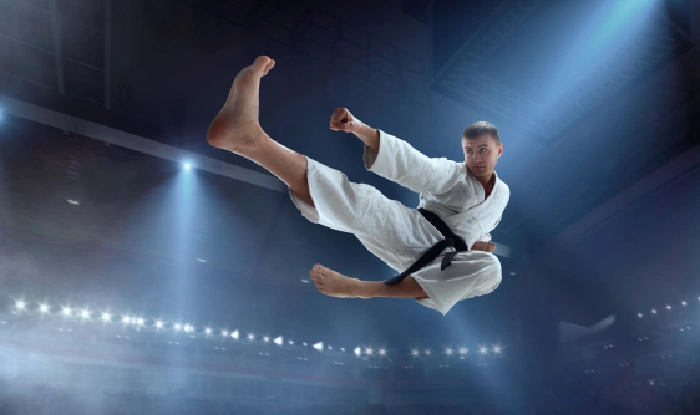
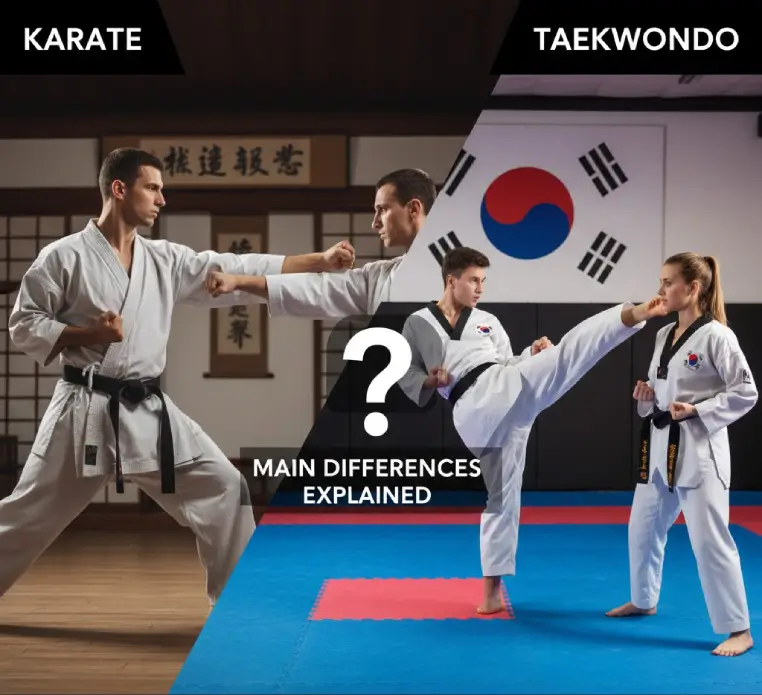
Karate is a classic Japanese martial art that originated in Okinawa. It focuses on hand striking with balanced kicks and disciplined movements. It builds strength, coordination, and mental focus. It also teaches self-defense techniques that are practical.
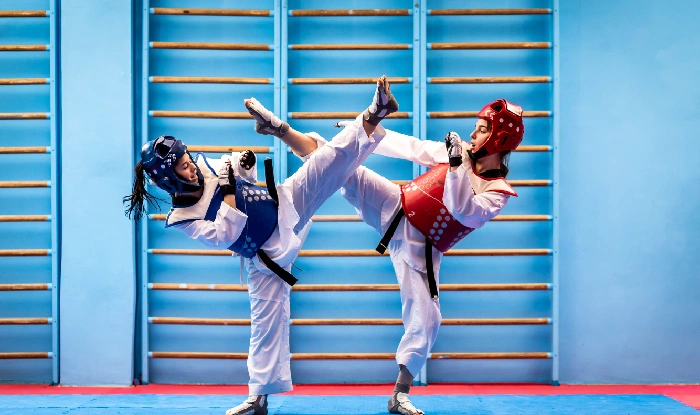
Taekwondo is a Korean martial art that was developed in the 20th century, focusing on fast, high, and long, powerful kicks. Taekwondo emphasizes agility, flexibility, and quick movements. It functions both as a highly competitive sport and an effective self-defense method.
The taekwondo and karate difference is apparent in their distinct approach to instruction: karate develops precision and control with foot and hand strikes, whereas taekwondo is focused specifically on kicks, agility, and speed.
Origins and cultural background
The difference between taekwondo and karate is in their cultural backgrounds:
- Karate originated in Okinawa, Japan, as a practical self-defense system. It later evolved into a comprehensive martial art that integrates mental discipline with physical training.
- Taekwondo was developed in Korea and is a combination of traditional martial arts with influence from karate. Turning out to become an internationally renowned sport.
Karate emphasizes the control of your body, concentration, and precision. Taekwondo emphasizes speed and high kicks as well as athleticism. These fundamentals influence the way students play in training, compete, and advance through the belts of every discipline.
Focus of techniques
The karate and taekwondo difference is obvious by the way they focus their techniques:
Karate:
- Balanced use of hands and feet for punches, blocks, and kicks.
- A stable stance allows you to strike with precision and control.
- Focuses on body alignment, breathing, and core strength.
Taekwondo:
- Focuses on kicking techniques, specifically spinning, high, and jumping kicks.
- Hands are mostly used as a defensive tool or to make secondary strikes.
- Develops upper body strength, flexibility, and explosive force.
The differences between taekwondo and karate extend beyond fitness benefits to include how each art approaches self-defense applications. The practice of either develops confidence or discipline.
Training methods and sparring styles
You will be able to understand the karate and taekwondo difference in their training:
Karate instruction:
- It comprises Kihon (basics), Kata (forms), and Kumite (sparring).
- The emphasis is on precise movements that are controlled and precise, as well as the proper body mechanics.
- Encourages students to develop discipline, time management, coordination, and strategic thinking.
Taekwondo training
- Basic techniques, such as the pomsae (forms) and dynamic sparring.
- The focus is on continuous movement, high-energy kicks, and maintaining mobility.
- Increases speed, reflexes, and endurance by doing various training and competition sparring.
In the contest, taekwondo vs karate scoring also differs: Taekwondo awards more points for high kicks and spinning kicks, while Karate is a combination of punches and kicks.
Physical benefits and fitness in Karate vs Taekwondo
Both martial arts improve overall fitness, coordination, and mental health:
- Cardiovascular fitness: Regular practice of techniques, patterns, and drills enhances heart health and endurance.
- Flexibility and balance are developed through regular practice.
- Strength and reflexes of muscles improve through repeated strikes and kicks.
Taekwondo’s emphasis is on dynamic kicks. It assists in the development of muscles and agility. Karate’s hand and foot techniques assist in strengthening the body as a whole. Regular training can help increase stamina, posture, as well as relieve tension, making it ideal for anyone of all ages.
Competition and sporting differences
Understanding competition helps to highlight the difference between karate and taekwondo
Karate competitions:
- Feature kata (solo forms demonstrating technique)
- Include Kumite (controlled sparring using strike points)
- Scoring is a measure of the balance, as well as precision and form
Taekwondo competitions:
- The emphasis must be placed on sparring according to the Olympic-style rules.
- The points are awarded to kicks that hit the head or body, especially spin techniques.
- Encourage speed, agility, and constant movement
The popularity of Taekwondo due to the 2000 Olympics has brought it worldwide popularity, and Karate has also made its Olympic debut in the year 2021. Both offer competitive pathways for those who wish to master a disciplined sport.
Practical self-defence
For real-world self-defence, both arts offer unique strengths:
- Karate teaches effective punches, blocks, and counterattacks for close-range defence.
- Taekwondo develops distance management, quick reflexes, and powerful kicks that can deter potential threats.
The effectiveness of either depends on consistent practice, proper instruction, and real-world application skills.
Choosing the right style
When deciding between difference between karate and taekwondo, consider:
- Primary goals: Are you focused on fitness, mental discipline, competitive sport, or practical self-defense?
- Body type and flexibility: Taekwondo suits those who enjoy dynamic kicking; Karate suits students who prefer balanced, controlled strikes.
- Training environment: Experienced instructors and a structured school environment improve progress.
If you’re in Navi Mumbai, professional karate training classes in Navi Mumbai at Nerul Gymkhana offer expert guidance, safe training, and structured programs for children and adults alike.
Conclusion
In the karate vs taekwondo comparison, both martial arts offer physical, mental, and self-defense benefits. Karate emphasizes precise strikes, body control, and balance, while Taekwondo emphasizes speed, high-energy kicks, and agility. Your choice depends on personal goals, physical comfort, and preferred style of training.
Training at a reputable center like Nerul Gymkhana allows you to safely explore the taekwondo and karate difference, build confidence, and enjoy lifelong fitness. Which style will you choose to start with, traditional, balanced karate or fast, dynamic taekwondo?
Frequently asked questions
- What is the main difference between karate and taekwondo?
The most significant difference between taekwondo and karate is their technical focus: karate emphasizes balanced hand and foot strikes with precision, whereas Taekwondo specializes in fast, high, and spinning kicks. Both are designed to improve self-defense, discipline, and fitness. - Can beginners start learning Karate vs Taekwondo?
Beginners can learn in both styles. Karate vs taekwondo classes are created for everyone with abilities, with taekwondo typically being more suitable for youth, and Karate is suitable for those who want more control and stability. - How long does it take to master Taekwondo vs Karate?
The level of progress in both disciplines is different, but generally getting the status of a Black Belt in taekwondo vs karate requires 3 to 5 years of practice with guidance. Regular training helps build proficiency, confidence, and discipline, and confidence. - Which martial art is better for self-defense, karate or taekwondo?
Both are efficient. The difference between taekwondo and karate lies in the approach: Karate teaches close-range strikes and counterattacks, whereasTaekwondo concentrates on energetic moves as well as distance-control. The effectiveness of the technique is dependent on regular training.