









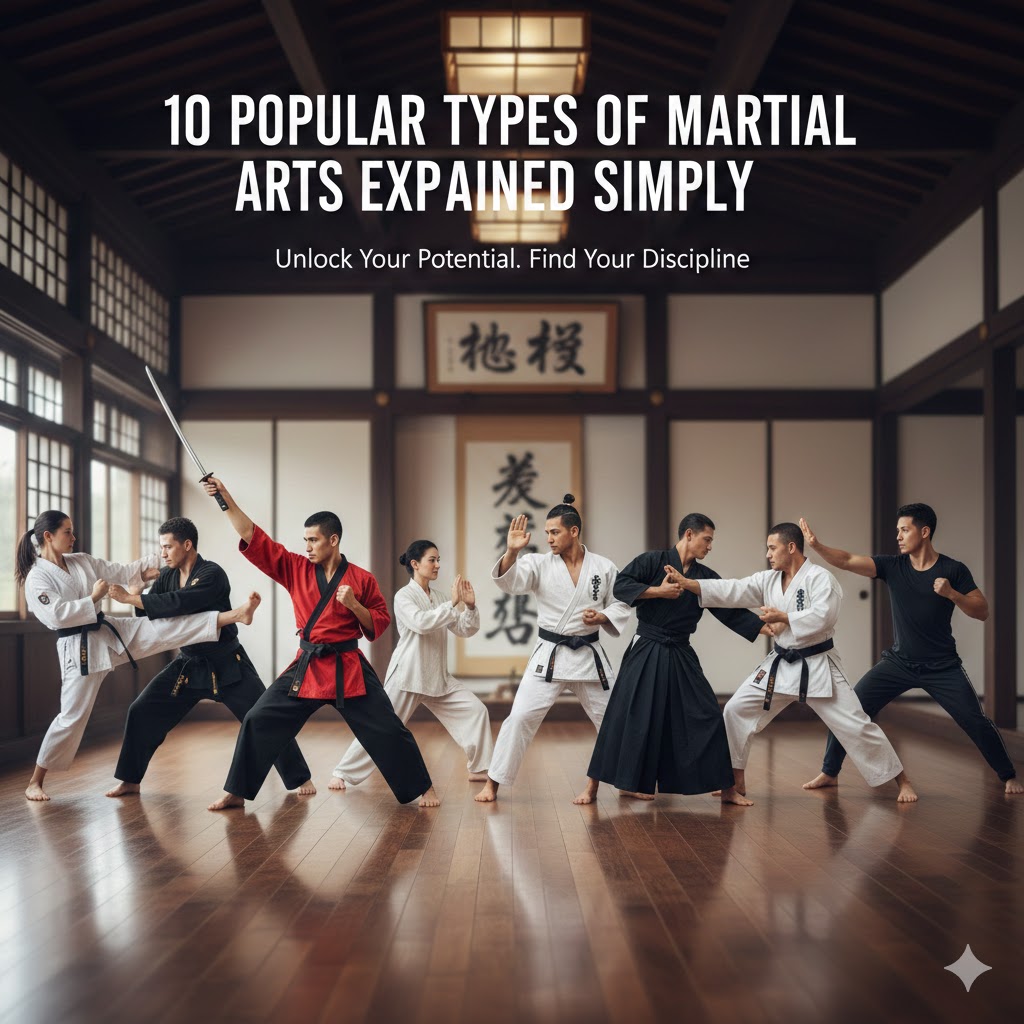
Many people want to get in shape, learn self-defense, or boost their confidence, but choosing the right martial art can be challenging. With so many styles available, it’s difficult to know what each one truly teaches. Some focus on striking, while others emphasize grappling or practical self-defense. Each martial art serves a different purpose and offers unique benefits.
This article gives a simple and useful overview of the most popular martial art types. It will help you understand the differences between these styles and which one might be best for your goals.
Why people learn martial arts today
People from all over the world and of all ages practice martial arts—not just athletes or professional fighters. Today, people pursue martial arts for fitness, confidence, and personal growth. Through various martial arts styles, many practitioners gain improved physical fitness, flexibility, and stamina.
Today, different types of martial arts are practiced by over 500 million people all over the world. This shows that they remain very popular for reasons far more numerous than competition or professional sports.
Karate: structured, disciplined, and beginner-friendly
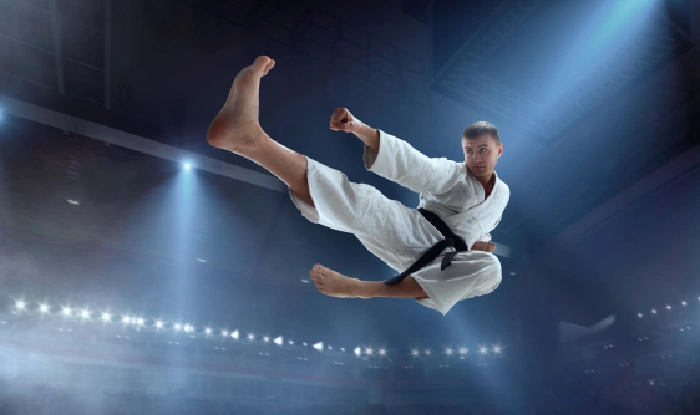
Karate originated in Okinawa, Japan and focuses on punches, kicks, and controlled movements.
Why do people choose Karate?
Its clear structure and emphasis on discipline make it one of the most popular martial arts for beginners
Suitable for children and adults looking for fitness, focus, and self-defence
Karate remains one of the most recognised types of martial art. If you’re looking for karate training classes in navi mumbai, training at Nerul Gymkhana offers guided learning in a professional sports environment.
Lorem ipsum dolor sit amet...
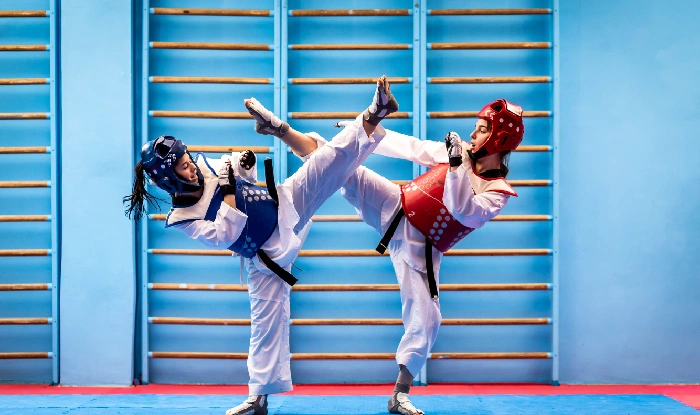
Taekwondo: fast kicks and sharp movement
Taekwondo originated in South Korea and is famous for powerful kicks and rapid leg movements.
Key features:
Emphasis on speed, flexibility, and balance in the various martial art types
Recognised Olympic martial art that suits active and dynamic training methods
Among different types of martial arts, Taekwondo fascinates those who are interested in physical movement and athletic action.
Judo: Smart use of balance and technique
Judo is a Japanese martial art based on throws and grips rather than strikes.
Why it stands out:
Uses technique and balance instead of strength, setting it apart from other martial arts types
Practiced in over 200 countries with a strong focus on control and safety
It is ideal for learners who prefer strategy and controlled physical engagement.
Brazilian Jiu-Jitsu: control over strength
Brazilian Jiu-Jitsu (BJJ) focuses on ground fighting and submission techniques.
What makes it popular:
Highly effective for real-life self-defence among modern types of martial art
Relies on leverage and technique rather than size or power
Among different types of martial arts, BJJ continues to grow rapidly worldwide.
Boxing: simple and powerful training
Boxing is one of the oldest combat sports, focusing on punches, footwork, and stamina.
The main benefits are:
It improves endurance, reflexes, and coordination, so it’s a good martial art type for getting in shape.
Used a lot for both competitive sports and general fitness
Boxing is still popular among martial arts types today because it is simple and works.
Muay Thai: full-body striking style
The “Art of Eight Limbs” is what Muay Thai is called in Thailand.
Key Points
Unlike many other types of martial arts, it uses fists, elbows, knees, and shins.
Intense training builds strength, conditioning, and mental toughness.
Many people choose it because the techniques are straightforward and practical, making it accessible for beginners
Kung Fu: traditional and diverse
Kung Fu represents a wide range of traditional Chinese martial arts.
Key points:
Includes many styles, movements, and philosophies across different types of martial art
Focuses on control, precision, and disciplined body movement
When asked to name a traditional martial art, Kung Fu is often the first that comes to mind.
Tai Chi: slow movements, strong benefits
Tai Chi refers to a Chinese martial art that is practised via slow movements.
Main Benefits:
Balances, supports posture, and calms the mind in gentle martial arts styles
Practised by millions worldwide for health and relaxation purposes
This demonstrates that not all martial arts are focused on combat or high-intensity action.
Krav Maga: practical self-defence
Krav Maga was developed for defence forces and focuses on real-world safety.
Key features:
Practical self-defence approach across modern types of martial art
Simple, direct techniques designed for real-life situations
It suits people who prioritise personal safety over competition.
India’s traditional martial arts
India has its own rich martial heritage, with several traditional styles often listed among the top 10 indian martial arts. Forms such as Kalaripayattu, Silambam, and Gatka represent some of the oldest martial art types, focusing on flexibility, coordination, and traditional techniques. These types of martial art highlight how Indian combat systems developed alongside culture, discipline, and physical strength.
How to choose the right martial art
Before choosing, consider:
Your primary goals: fitness, self-defense, or mental discipline
Preference for striking versus grappling styles
Age and current physical condition
Availability of qualified instructors in your area
Training at a trusted sports institution like Nerul Gymkhana ensures safe learning, proper guidance, and long-term growth across different types of martial arts.
Frequently asked questions
The most popular martial art types include Karate, Taekwondo, Brazilian Jiu-Jitsu, Boxing, and Muay Thai. These styles are widely practised for fitness and self-defence. Beginners often choose them for structured training.
There are hundreds of different types of martial arts practised worldwide. Most originated in Asia and later spread globally. Each style reflects its culture and purpose.
If you need to name a type of martial arts for beginners, Karate and Taekwondo are good options. They focus on basics, discipline, and safety. These styles help build confidence gradually.
Yes, the top 10 indian martial arts often include Kalaripayattu, Silambam, and Gatka. These styles reflect India’s traditional combat systems. They focus on flexibility and discipline.
Conclusion
Understanding martial art types helps you choose a style that matches your lifestyle and goals. From traditional systems like Karate to modern approaches such as Brazilian Jiu-Jitsu, the variety of martial arts types means there is something for everyone. With many types of martial art available today, consistency and proper guidance matter more than the style itself.
Training at a trusted sports institution like Nerul Gymkhana allows you to explore different types of martial arts safely while building confidence, fitness, and discipline.